

Emerging like a distance runner from the back of the pack, biophilia has become a front-runner trend in both public realms and garden design. But as this movement gathers momentum, a common question arises: What is biophilic design?
While many assume it is simply about adding a few potted plants to a room, the reality is far deeper. It is a holistic design philosophy that seeks to create spaces that mimic natural systems and processes, fostering a meaningful connection to nature.
The Essence of the Philosophy: Arranged Disorder
Biophilic design walks hand in hand with biodiversity. It encourages complex planting, high densities, and seasonal change. Unlike the sleek and pristine aesthetics often found in modern architecture, true biophilia allows for things to be in the “wrong” place.
It embraces the haphazard – textures, granular looseness, and piles of things are becoming visible elements in landscape architecture. However, to appeal to our human need for legibility, this “wildness” requires a sense of order.
We feel most comfortable when we know a space is cared for. For example, we appreciate a neatly trimmed verge acting as a counterpoint to a larger area of long meadow grass. This contrast allows us to see that the wildness is intentional, not accidental.
Why Do We Need It?
The materiality of biophilia provides visual touchpoints that comfort us deep down. Feeling the hum of nature in the background of our lives makes us feel good because it is a fundamental part of our evolutionary psyche.
This isn’t a new concept.In the mid-17th century, poet Andrew Marvell wrote ‘The Mower Against Gardens,’ critiquing human interference with nature and “stupefied” plants that required fertilised soil. He argued for letting nature be its own agent – and that was 350 years ago!
More recently, the massive spike in the gardening industry during the Covid pandemic provided undeniable proof of our innate need for this connection.
Core Principles: How to Apply Biophilic Design
To understand what is biophilic design in practice, we look at three rooted principles:
- Direct Connection with Nature: This involves incorporating actual natural elements, using complex sensory planting and landscape features that encourage us to use our senses.
- Indirect Connection with Nature: When direct connection isn’t feasible, we use elements that evoke the natural world. This includes natural patterns, colours, lighting simulations, artwork, or large windows that offer a green backdrop to indoor spaces.
- Spatial and Place-Based Relationships: This focuses on mimicking natural environments to create a sense of refuge and prospect. A cosy nook with a view (prospect) or a semi-enclosed seating area (refuge) can greatly enhance a space’s biophilic qualities.
Biophilia in Action: Merstham Park School
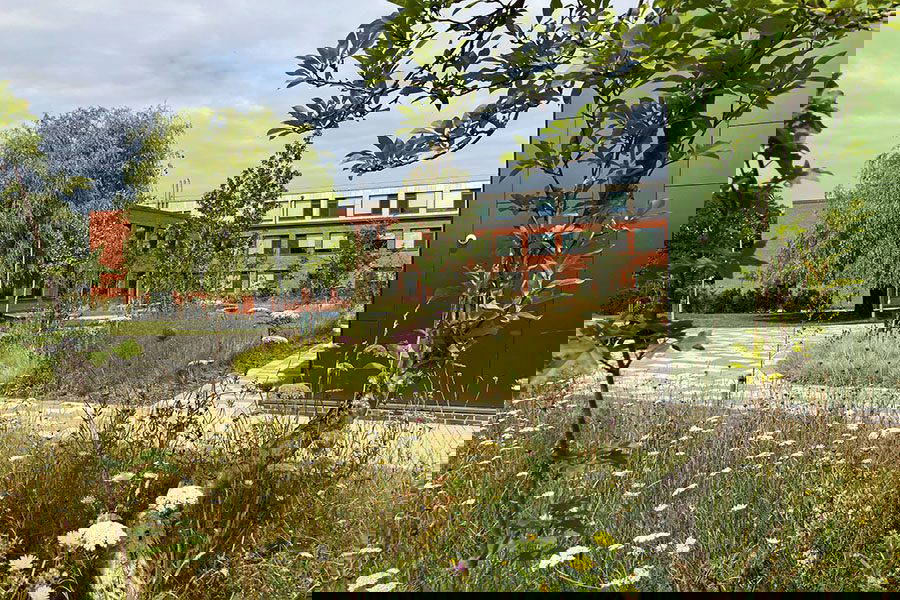
We are proud to see these principles recognized in our own work. Our design for Merstham Park School has been shortlisted for the SGLD Awards 2026. It stands as a high-quality first example of biophilic landscape design at a Department for Education-funded secondary school.
Start Your Biophilic Journey with Natural Dimensions
As we spend more time indoors, creating spaces that support our natural inclination towards nature is critical. Biophilic design offers a powerful, evidence-based solution to create healthier, happier environments.
If you are in Manchester, Cheshire, Lancashire, or anywhere across the UK, and are curious about how biophilic design can transform your space, we invite you to explore the possibilities with Natural Dimensions.
Let us help you bring the restorative power of nature into everyday life.