Introduction
There is a gravitational pull towards city living and, with more millennials and gen Z in the workforce, cities and towns are adapting themselves to become aligned with an emerging population looking for space which can host work, social life and recreation. The long term ‘liveability’ of city centres with lifestyle orientated places is becoming a design requirement and this should involve the full spectrum of city design disciplines.
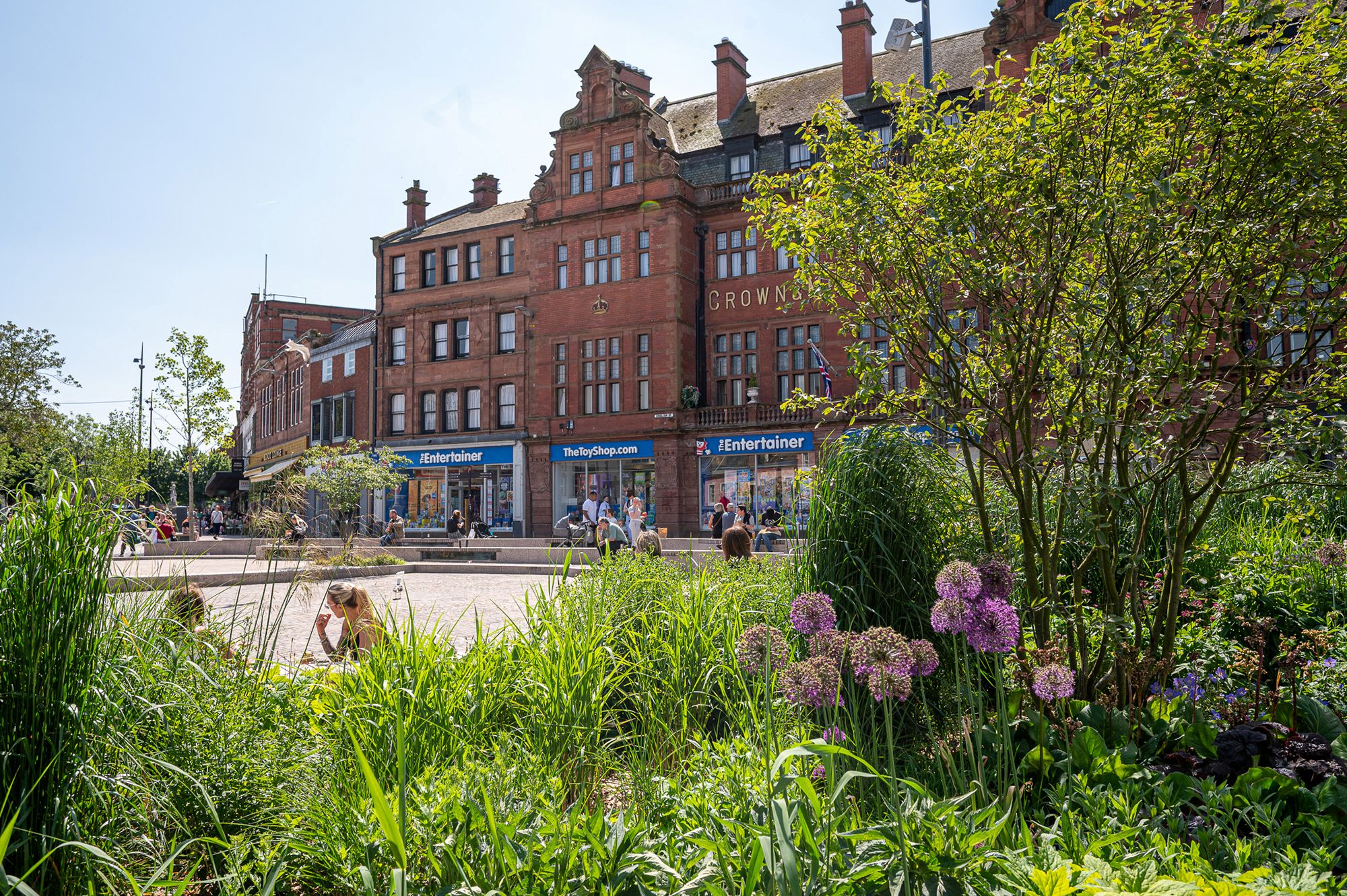
Carlisle Greenmarket
Access to nature and allowing enjoyment of natural beauty is becoming central to city living performance. In terms of both infrastructure and commerce, it is imperative for cities to develop with wellness, health and enjoyment of its inhabitants in mind if they are to retain and attract a breadth of age and talent who can in turn contribute to a culture which strengthens its own identity. An enlightened understanding of what good cities look like, mutual respect and positive collaboration between disciplines, belief in the end product by developers, and city planning which enables progressive solutions, will help us make cities liveable healthy and beautiful. These are cities which accommodate climate change, are resistant to weather extremes, absorb and reduce pollutants and are commercially sustainable. More than just a nice to have, city nature establishes emotional wellbeing, encourages healthy interaction, increases dwell time and footfall, encourages cultural expression and generates city investment.
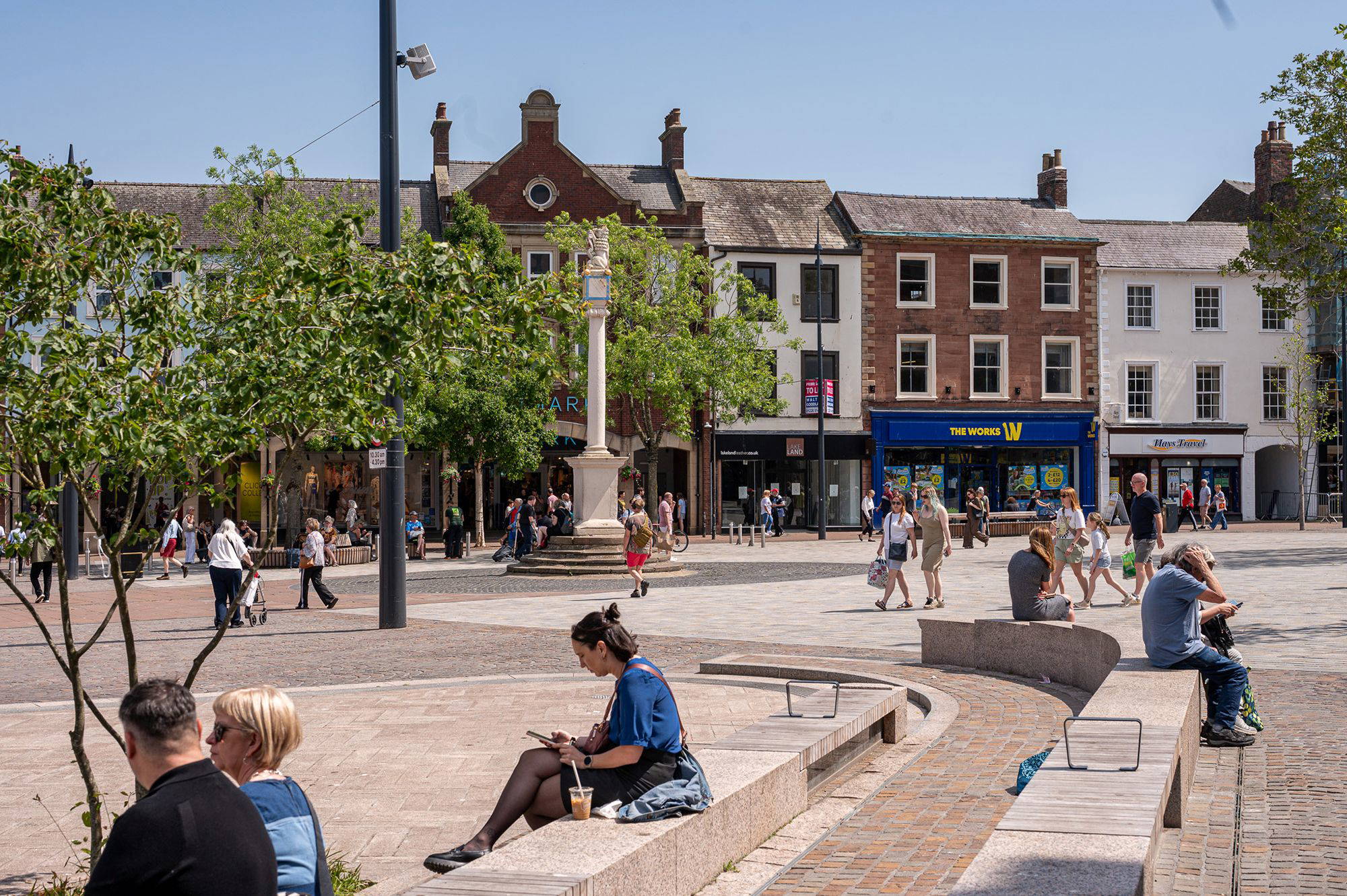
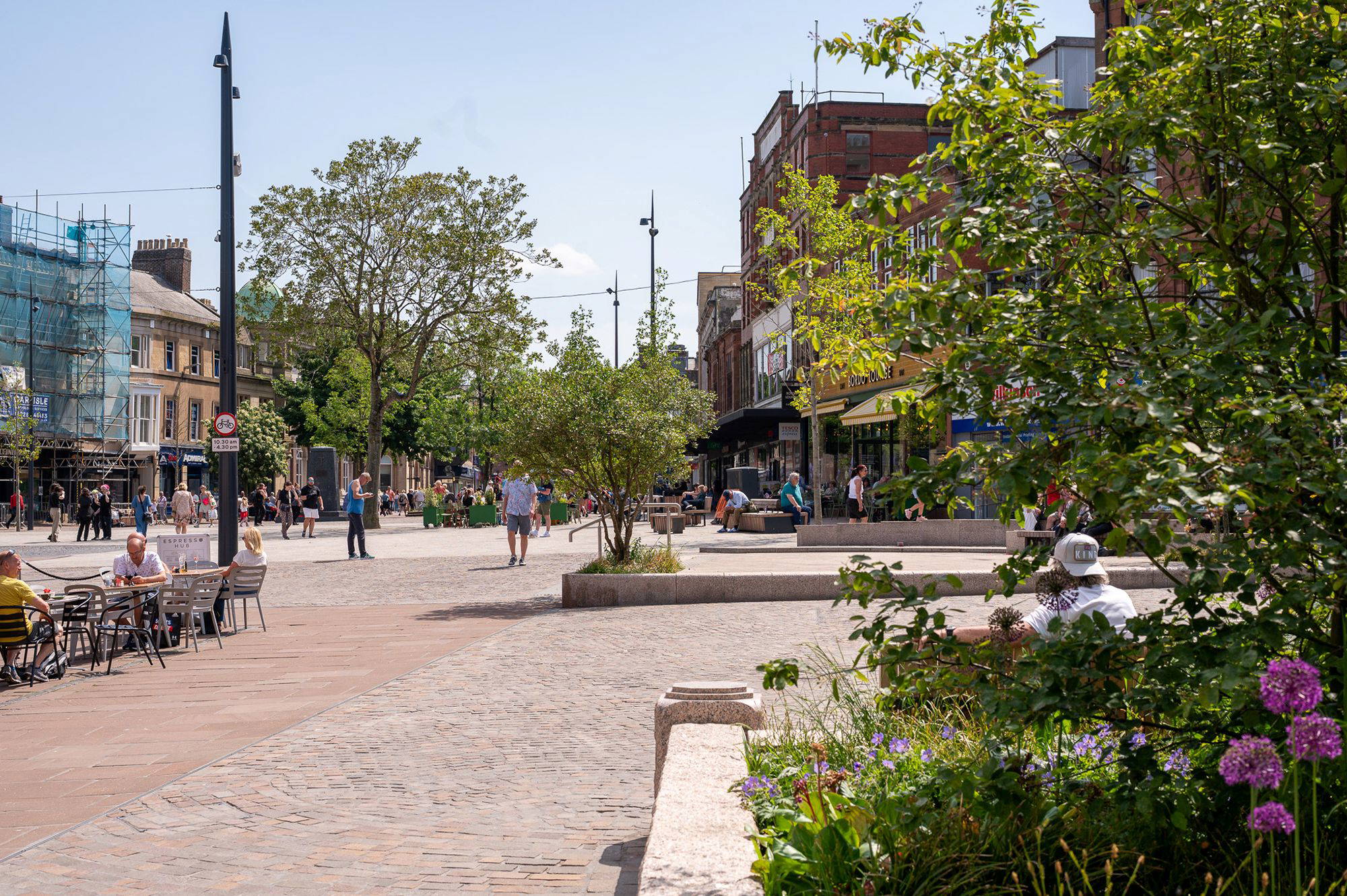
Much of our own business focus over the last two years has been on the design and construction of three interconnected spaces in Carlisle city centre, these being Market Square, Greenmarket and Castle Street. The spaces form a spine from the Cathedral southwards through the city centre for 200m. Our designs aimed to help regenerate these spaces as interlinked commercial and cultural destinations, respecting the city’s history with an aesthetic of a forward looking cosmopolitan city, combining high quality planting and carefully detailed high quality materials.
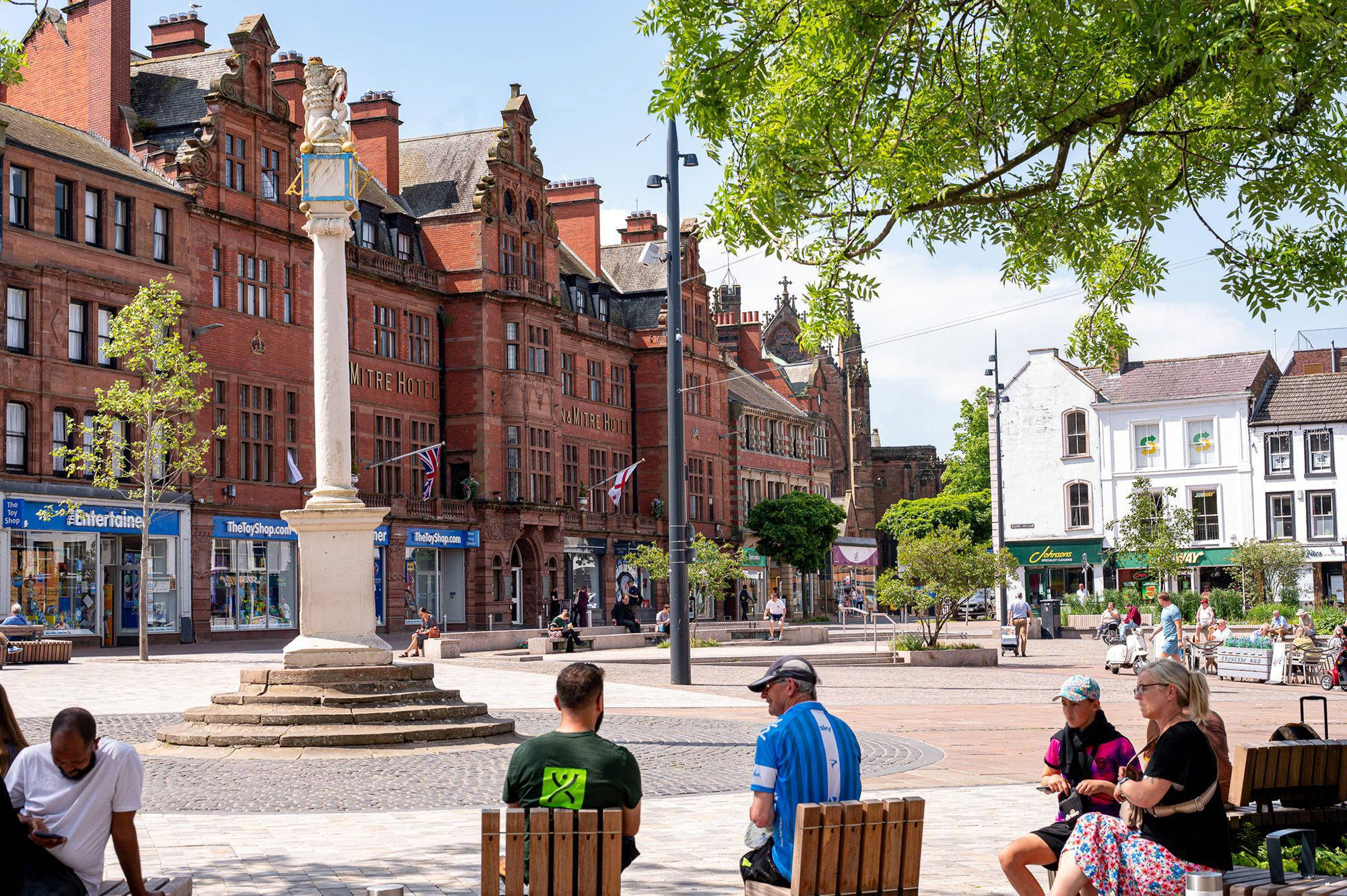
Carlisle Market Square and Greenmarket
The construction completed in September last year and the news has been announced in January this year that the Tour De France will be coming to Carlisle! One of the most iconic international sporting events is landing right into the city centre in June 2027!.
Culture
The Tour De France will not only be a fantastic event but have a lasting impact on the culture of Carlisle. It will leave a lasting legacy of cycling culture, create over a hundred million pounds of economic benefit, spawn regional cycling events, local and regional cycling hubs and prompt the installation of city cycling infrastructure. That same year will see year a new city centre university campus open in the historic Citadels building of the city with a new Business Investment District recently initiated to bring further investment growth and tourism to the City. The city is also applying to be the 2029 city of culture. Carlisle is where it’s at!
Looking Back and Looking Forward
The Great Border City has been a city of huge historical significance which had fallen behind over recent decades. Despite the city being crammed with architectural gems, the public realm was monotonous, lacked vitality and did little to convey the city’s stature and history. Crucially though, the city is compact. A twenty-minute walk can take you from the fabulous, listed railway station building, through the Grade 1 listed citadels, along a new green pedestrian corridor past statues and memorials into Market Square and Greenmarket, past the 800-year-old town hall and cathedral, and up to a castle that’s nearly a thousand years old! Through Future High Street Funding topped up with United Utilities Green Recovery funding, our schemes, together with a wider network of other schemes, are aimed at reinvigorating and interconnecting city spaces with sympathetic modern urban realm interventions, tree planting, high quality floorscape, SUDS gardens, ground level planting, cycleways separated from the highway, modern street furniture and artwork. Public concerns about the cost of improvements are countered with overwhelming evidence for long term return on revenues.
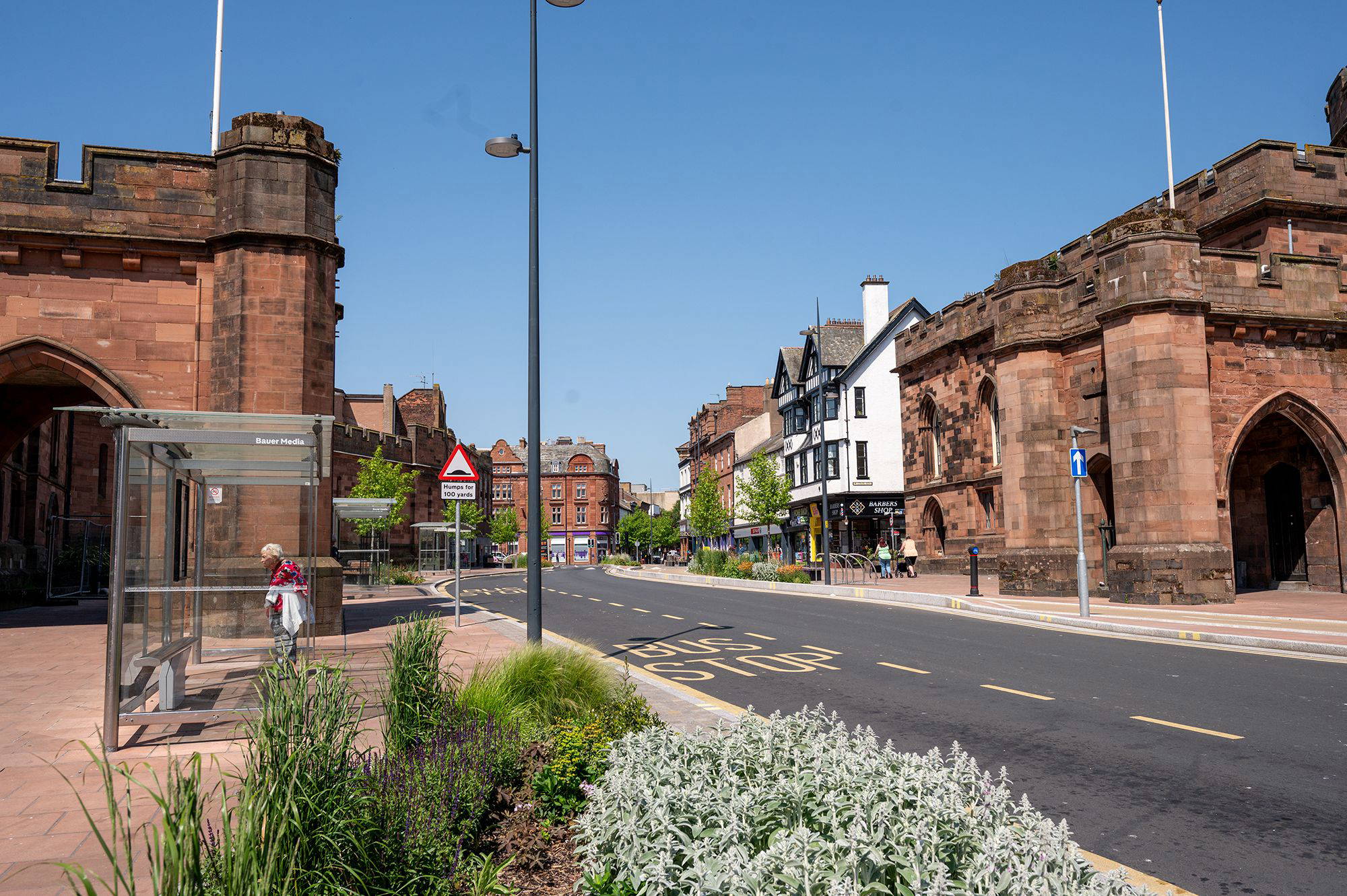
Carlisle Citadels
The Designs
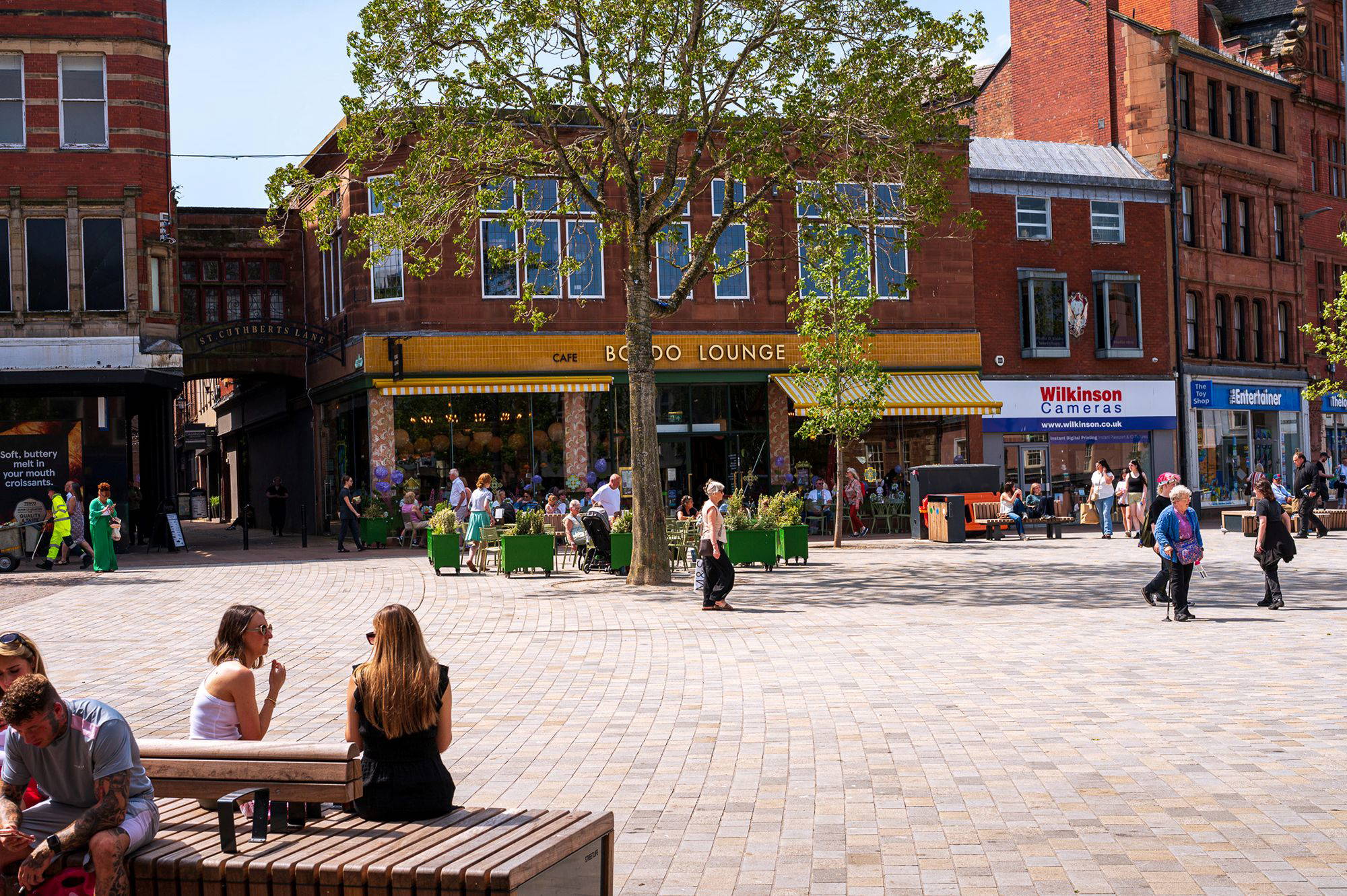
The designs for the 3 spaces incorporate progressive modern urban landscape architecture to encourage a high diversity of user type into versatile and attractive urban space. The Greenmarket is remodelled as an event space with a permanent stage encircled by a sculpted seat wall which is also the gateway into the historic quarter. Views to the stage are from the seat wall and from a seat edge along the inside of a large, raised stone planter which allows people to nestle into a 16m long raised planting bed. The raised bed arcs across the back of the event space and provides colour, structure and seasonal bloomings throughout the year. It also creates a green pedestrian street along the back of it facing the Guildhall. Each side of the stage is flanked by a high quality multi stem tree which you can sit under.
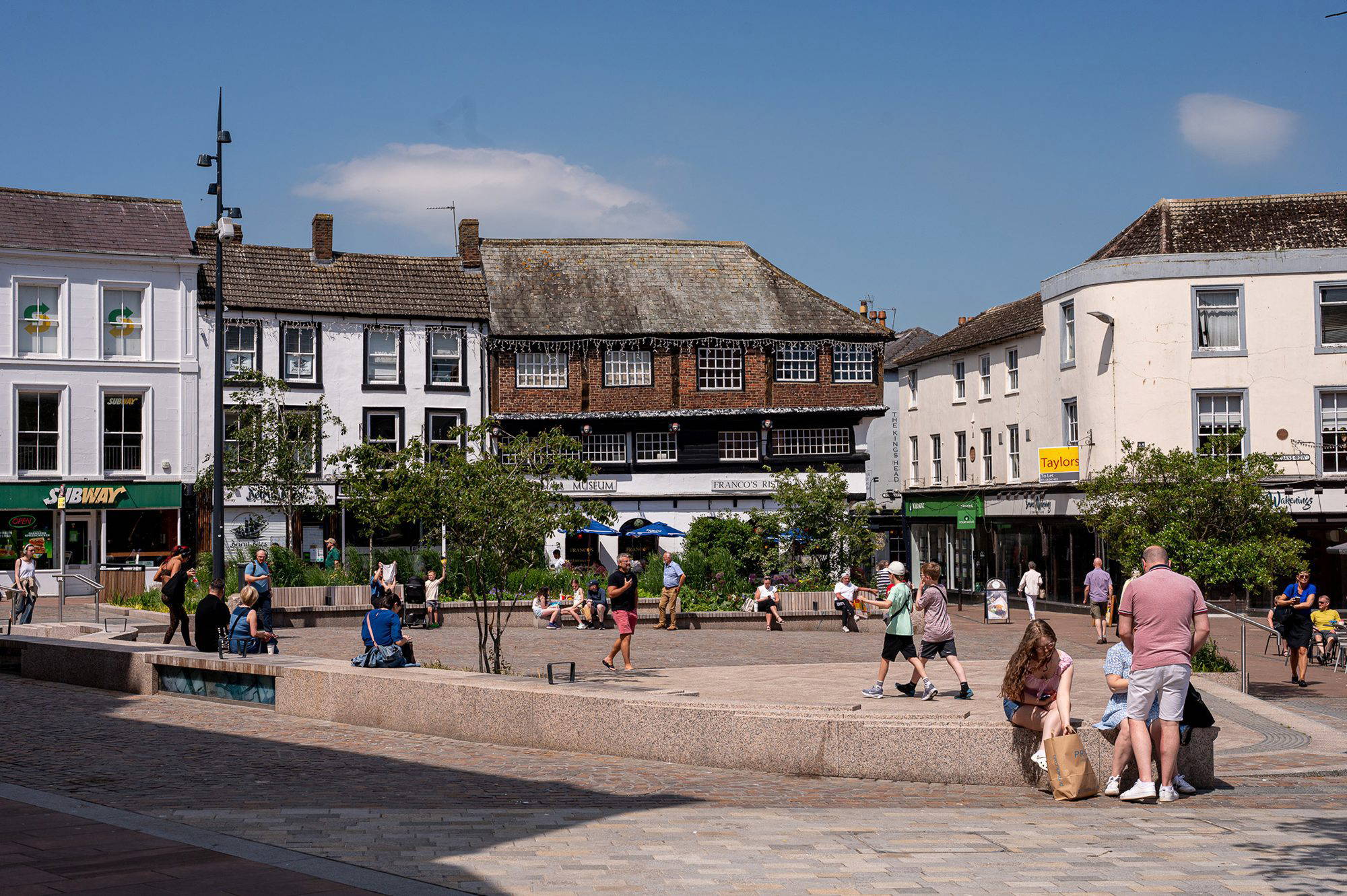
Carlisle Greenmarket
Through the city, ground level planting is becoming an increasingly noticeable feature of the walking experience, spreading naturalistic planting across the floorscape through rain gardens and planting beds. The planting creates a tapestry of colours and textures which truly delight passers-by. They look good for large parts of the year, offer biodiversity value and absorb rain and run off. We noticed that after the establishment of the Greenmarket planting, people would do laps around the main planter looking at the plants and the butterflies fluttering through them. It’s a place where people want to dwell which in turn has measurable returns.
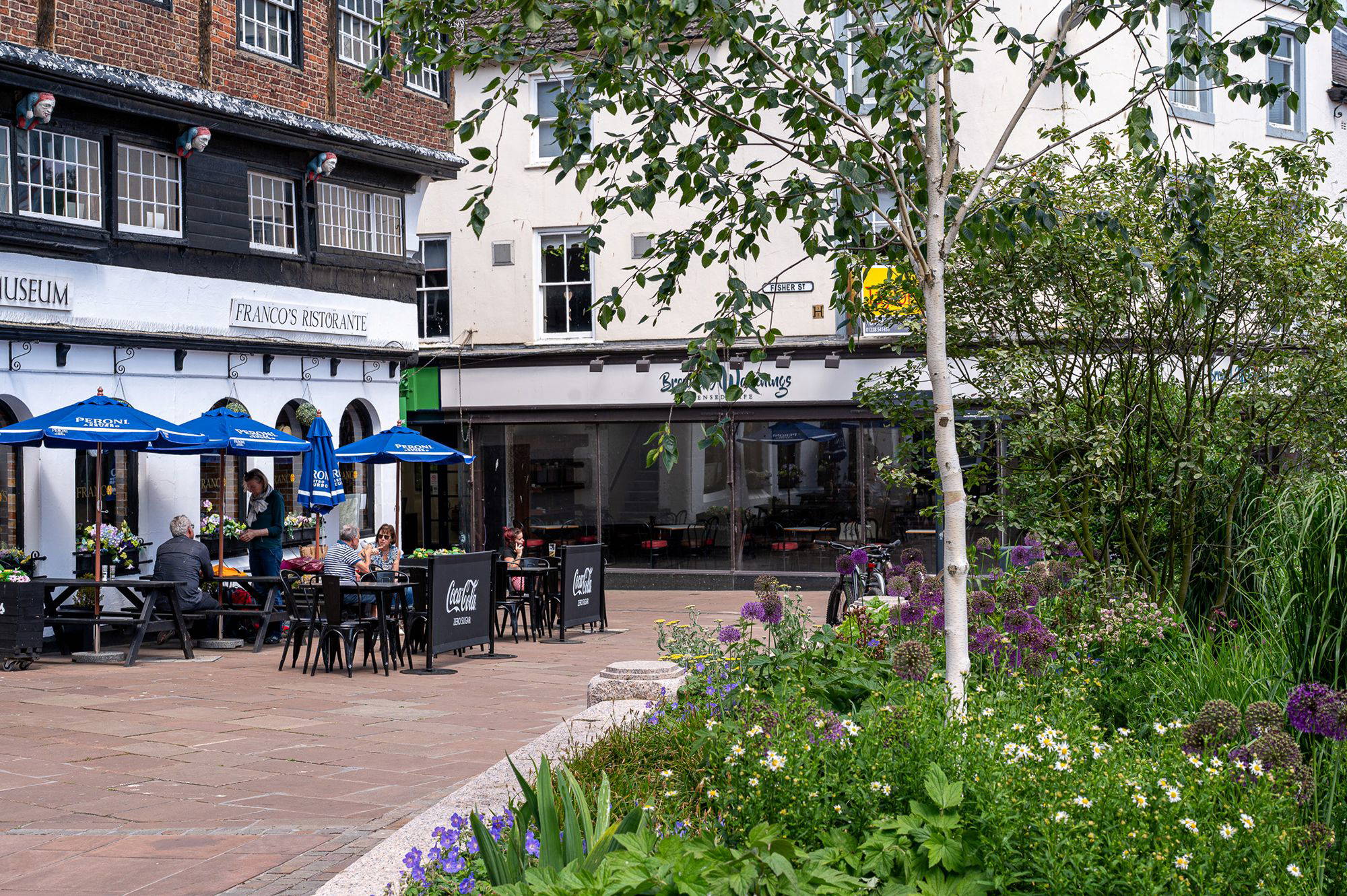
Greenmarket outdoor dining and planting
A significant increase in tree planting also contributes to the introduction of an urban eco system. The experience of walking under tree canopies is a feature which you can experience as soon as you emerge from the station and go into the city. The trees and canopies create enticement and beauty, frame views and vary perspectives whilst playing with light. New tree planting frames Market Square and links into an avenue running all the way down to the station. The station forecourt is currently being remodelled into a pedestrian focused green arrival space which removes car dominance and reintegrates previous historic features.
Nature at the heart of how we live
Nature is at the heart of how we will be living in the 21st century and Carlisle has grasped its opportunity to put nature and wellbeing at the heart of its reinvention. There is a growing influence of plant focused design principles on the development of its public spaces and the use of increasingly complex plantings in municipal beds, rain gardens, urban gardens and streetscapes.
The intimate complex combinations of plantings are hugely popular, and were a winner of hearts of minds in the Carlisle scheme, helping to counter dissatisfaction with how long parts of the build programme were taking ! Large drifts of ground cover planting were not possible in well foot trafficked city space where people criss-cross between shops. But lawns around public buildings offer opportunities for low maintenance flowering meadows even in the narrowest of spaces. The lawns around the Cathedral have been adapted to a lower mowing regime and meadow grass is allowed to develop once bulb flowerings are finished. Civic building and office lawns are places where naturally occurring plant communities can be encouraged to establish even in dense development. ‘Enhancing a patch of landscape in a city can remind us of larger moments in nature ’ Claudia West states in her seminal work ‘Planting in a Post Wild World’. For nature reconnection, “The front lines are not in the Amazon rain forest or the Alaskan wilderness but in our backyards, parking lots and elementary schools”.
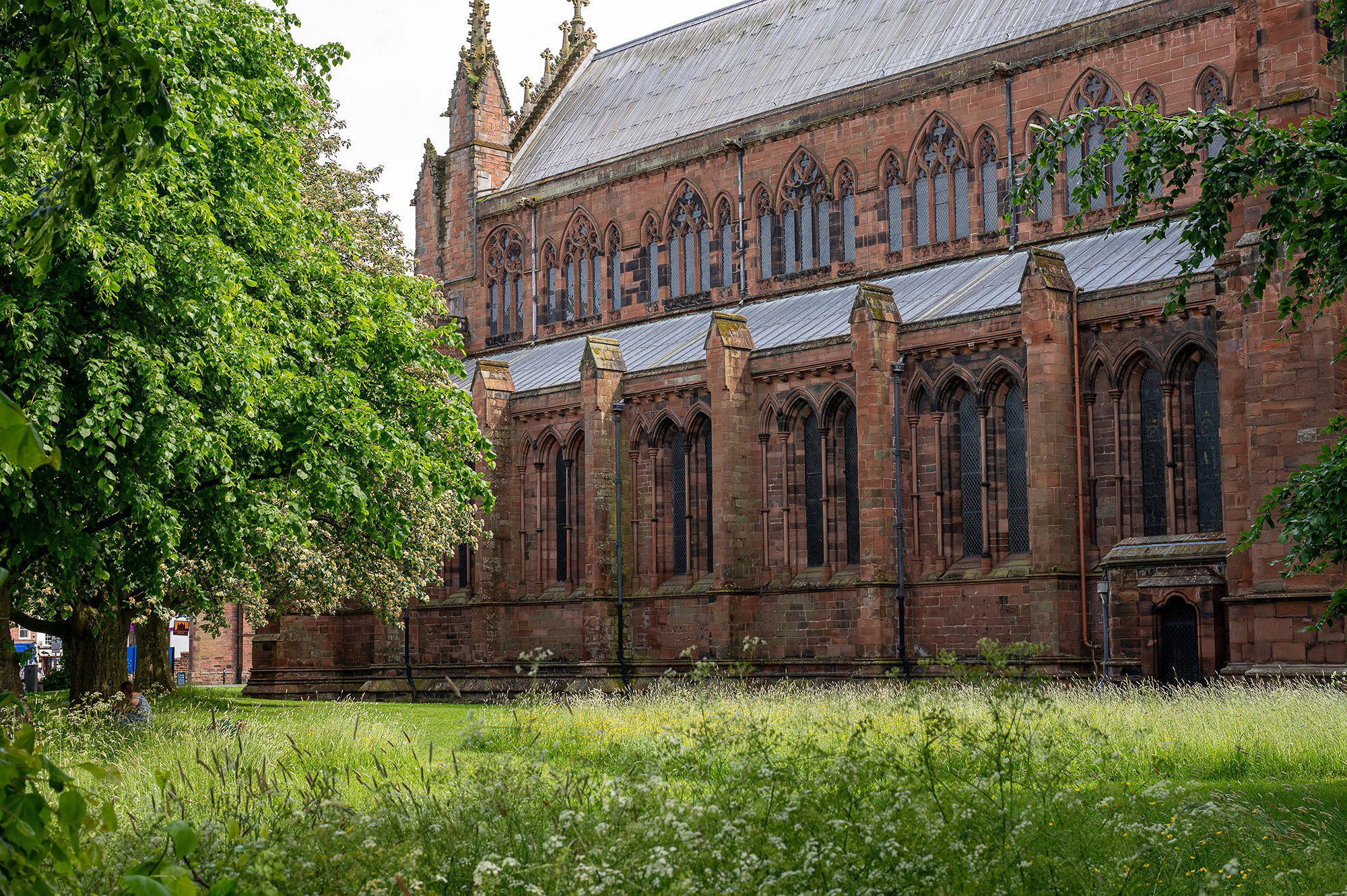
Carlisle Cathedral and meadows
The appearance of wild plant communities may not always be the tidy manicured beds of the past and they may not produce the ordered flowerings of traditional municipal beds. If wildness is surrounded by frequently managed close mown strips, then the wildness is seen to be intended and managed. Some community liaison is required to inform people of what new planting styles are trying to achieve and this may require providing quantitative data about how much additional biodiversity it offers and how much additional rain it is absorbing to ensure nature design is seen to be founded in factual gain and to show why money is being spent on it.
Landscape architecture sits at the intersection of so many of the elements and disciplines which feed into the physical, social and commercial performance of a city.
At Carlisle, we analysed movement patterns, shadow patterns, building details and history, building angles, services and utilities. We designed the spatial arrangement of the spaces, identified planting and SUDS opportunities and positions, specified floorscape, wall and furniture materials, designed the planting, chose the tree species and curated the art work. Curtins, the engineers, did excellent work in ensuring that all our ideas above ground were fully integrated into extensive below ground infrastructure and met all the requirements.
Sensory Variability and Contrast
A lot of thought was given to the choice of materials for paving. Combinations of colours and sizes in the Market Square floorscape attempted to create a market aesthetic colour mosaic with a random variability in length. The colours attempted to create a muted warmth to allow the quality of the building features to be revealed. The awkward building angles were blended into the spaces using a sett pattern which arced across the square. In the Greenmarket, arcing fantail patterns blended into the market square arc language. Local Cumbrian red sandstone created an apron around all the areas against the shop frontages.
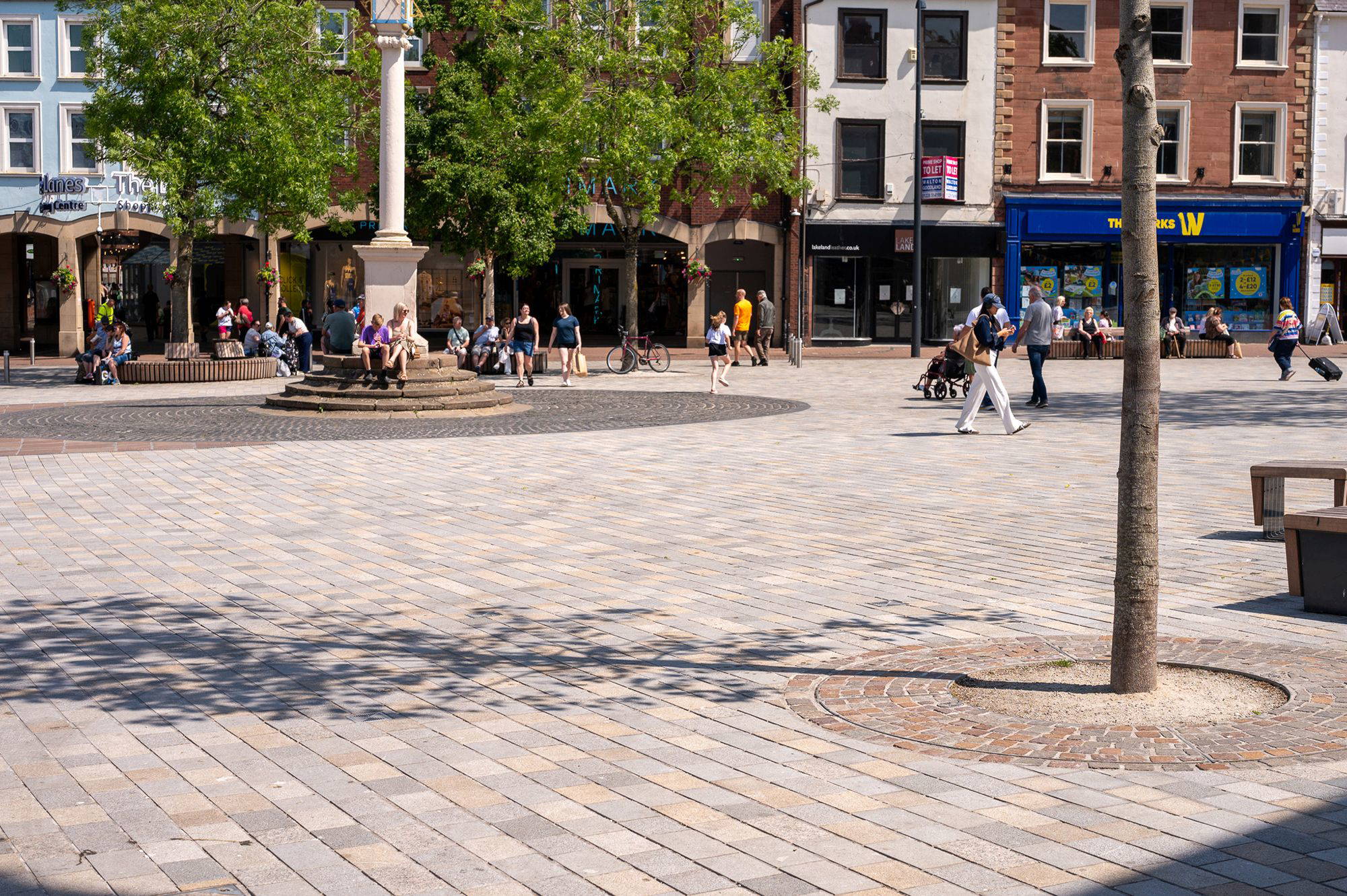
Carlie Market Square
Emotional Connection
A part of the Carlisle scheme which was crucially important to get right was the relocation of the war memorial, which was a sensitive decision and met with strong emotions. Carlisle’s history is strongly linked over centuries to military defence and there are still military barracks within the castle grounds.
The moving of the memorial was a repositioning in a literal sense but also in terms of elevated importance. Its new position, moved from a corner of the Greenmarket, is now a central position in the main market square. It now stands on a central axis in line with the town hall visible along a much longer view. The memorial has been elevated onto a new second plinth into which Victoria Cross stone plaques have been positioned, moved from their original position in the paving next to it. I think its new location is much better but the deep emotional connection to the memorial is evidence of the meaning particular places has.
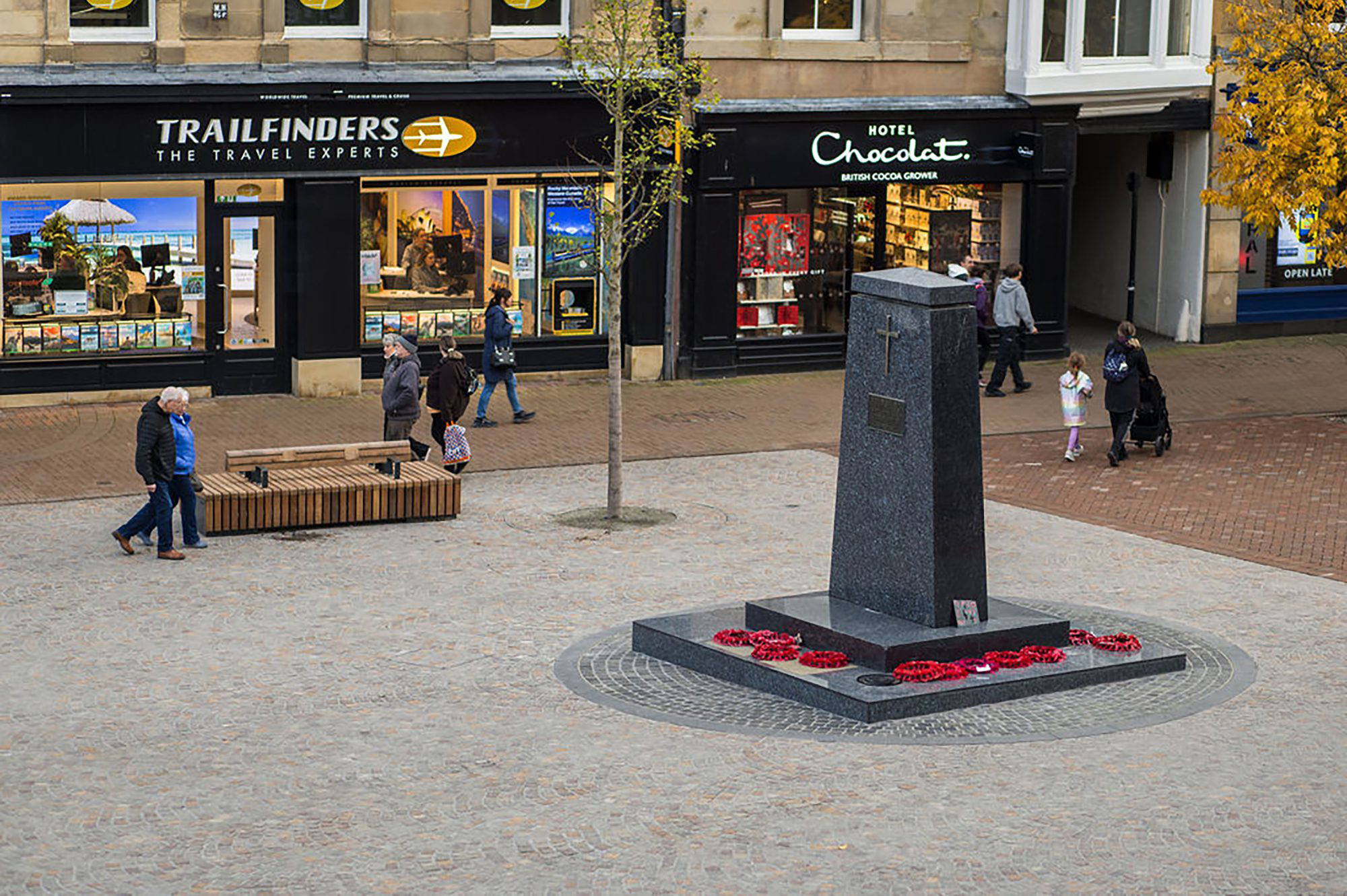
Carlisle War Memorial, Market Square
At Merstham Park School, our award winning biophilic school design project, the most cherished space is the memorial garden at the front of the school to commemorate the former head teacher Martin Beard. Etched glass panels were arrayed in a garden space, planted with light breezy grasses and perennials and contained within a strong yew hedge to create a green classroom of sorts. The glass panels are etched with values espoused by Martin which became the values entrenched into the school’s ethos. The garden offers stillness for reflection which is quite separate to the bustle of the school life.
It is our job and duty as designers to be sensitive to and analyse what landscape can potentially mean to people and what it is about our physical landscape that affects our emotions, health and happiness. Rather than having a transient effect, the quality of a landscape and our memories and experiences in it, help to shape the kind of person we are.
City design is a complex task with so many different streams of requirements. Every completed city space is the culmination of years discussions, differences of opinion, last minute design changes, unknown service line discoveries, endless design team meetings, mistakes, and a huge amount of professionalism, skill and good will. Clarity of vision, unified purpose, and leadership integrity helps immeasurably to bring all the different parts into place.
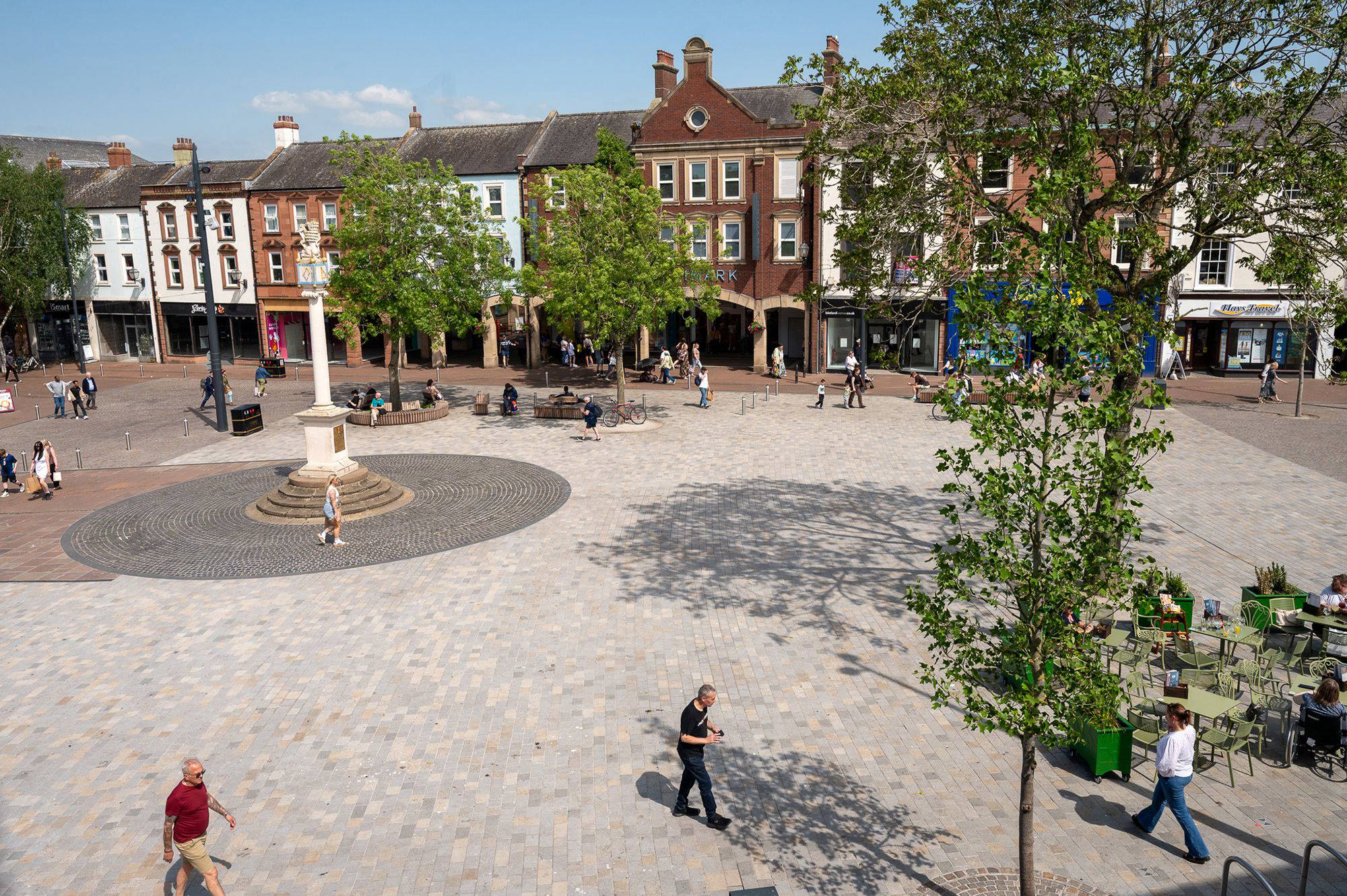
Carlisle Market Square
The draft Design and Placemaking Planning Practice Guidance for use by decision makers, designers and developers is making progress at putting ‘identity’, ‘nature’ and ‘liveability’ at the heart of well-designed places. The guidance thankfully acknowledges a need for designs that ‘lift our spirits ‘with places which are resilient, green and beautiful. The guidance is part of the new Planning and Infrastructure Act 2026, and time will tell how effective the placemaking guidance will be, but it is at least encouraging to see the direction of travel. It is an Act which the government claims has nature enhancement embedded into it.
The worry shared by many is that the act’s new Nature Restoration Fund will allow developers to bypass site specific enhancements. Pockets of ground where nature could be introduced may start to become the sterile turf and overused evergreen landscape we desperately need to move away from. As always, I imagine that decisions will ultimately come down to the strength of character, personal values and aspirations of key figures. It is after all the aspiration of key figures in Carlisle to enable cycling fever to be in full force next year in Carlisle!